
Step-by-step guide
Bill request from table QR
A practical guide to letting guests ask for the check from a table QR code while staff keeps table context.
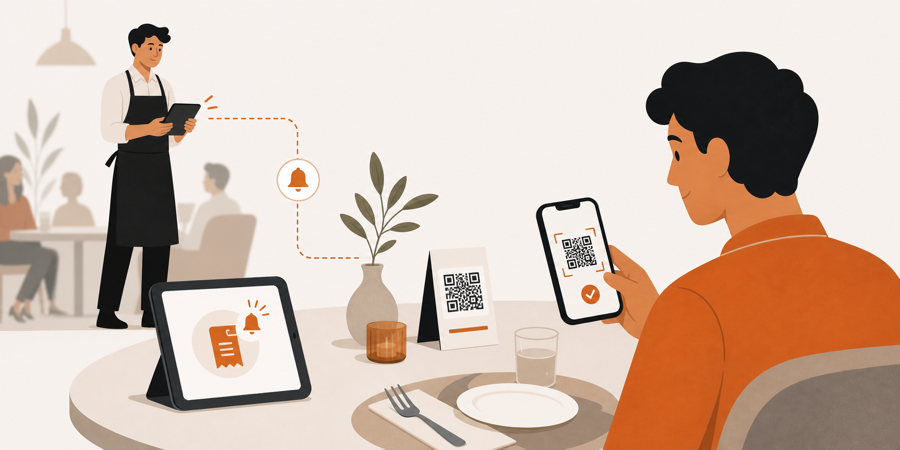
The check should not require chasing staff
Guests often finish the meal before service feels finished.
They may be ready to leave, but they still need to catch a waiter, ask for the check, wait for staff to notice, and wait again while the table is prepared for checkout.
A table QR bill request shortens that moment.
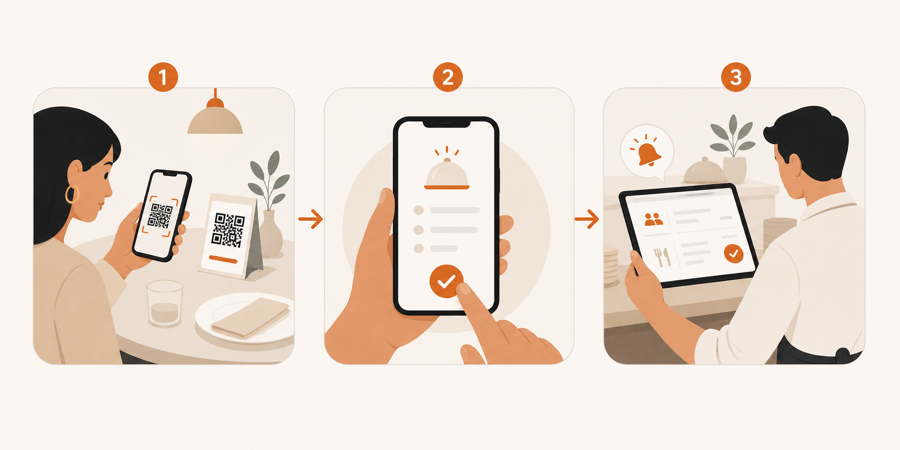
The guest scans the QR code already on the table and asks for the check from the same flow they used to browse, order, or request help. Staff sees which table asked, then handles checkout with context.
Bill request is not the same as payment
This is important.
A bill request is a service signal. It tells staff: this table is ready for the check.
Payment is the next step. That may happen through staff, cash, a card reader, a payment link, or mobile pay-at-table flow.
Keeping those separate is useful because many restaurants want faster checkout without making every payment fully automatic.
For the payment step, read Pay at the table with mobile payments.
Why table context matters
A generic message like “guest wants bill” is not enough during service.
Staff needs to know:
- which table asked
- whether the table has an open order
- whether anything is still being prepared
- whether items need review before checkout
- whether another guest already requested help
Without table context, the request can become another interruption. With context, staff can act quickly.
The simple flow
A good bill request flow is short:
- Guest scans the table QR code.
- Guest taps bill request.
- Staff receives the request with table context.
- Staff reviews order state.
- Staff brings the check or starts the payment flow.
The guest gets a clear way to ask. Staff keeps control.
When this helps most
Bill request from table QR works best when guests sit down and service happens around the table.
Good fits:
- cafes with table service
- bars and pubs with group tabs
- casual restaurants
- busy lunch venues
- terraces or outdoor seating
It is less useful when every guest pays at the counter before receiving food.
What can go wrong
The weak version is just a button that sends a vague notification.
That can create problems:
| Weak setup | Better setup |
|---|---|
| request has no table | request includes table context |
| staff sees only a generic alert | staff sees order state |
| guest expects instant payment | guest understands staff will prepare checkout |
| request is separate from ordering | request lives in the same table workflow |
| no one owns the next step | staff reviews and closes the loop |
The goal is not to add more notifications. The goal is to make the next service step obvious.
Where MenuSuite fits
MenuSuite treats bill request as part of table service.
Guests can scan from the table, browse the menu, request help, ask for the bill, or place an order. Staff sees the table context and reviews the action before it becomes operational work.
If guests need lighter service help before checkout, read Waiter call from QR code. If guests should also pay from their own phones, read Pay at the table with mobile payments. If you are still choosing between menu-only and table workflow, read QR menu vs QR ordering system.
Further reading
- Square explains how table payment can shorten the end-of-meal flow in Tableside ordering and pay at table.
- For broader restaurant technology context, see the National Restaurant Association's Where operators plan to invest in tech.